News · Chile
ANEI brings together private sector to combat illicit economies in Chile
Alessandri | Various private-sector industries have joined forces to establish the first National Association Against Illicit Economies (ANEI), an initiative aimed at coordinating strategic cooperation with authorities to reduce the supply of illegal products and discourage the purchase of goods through informal…
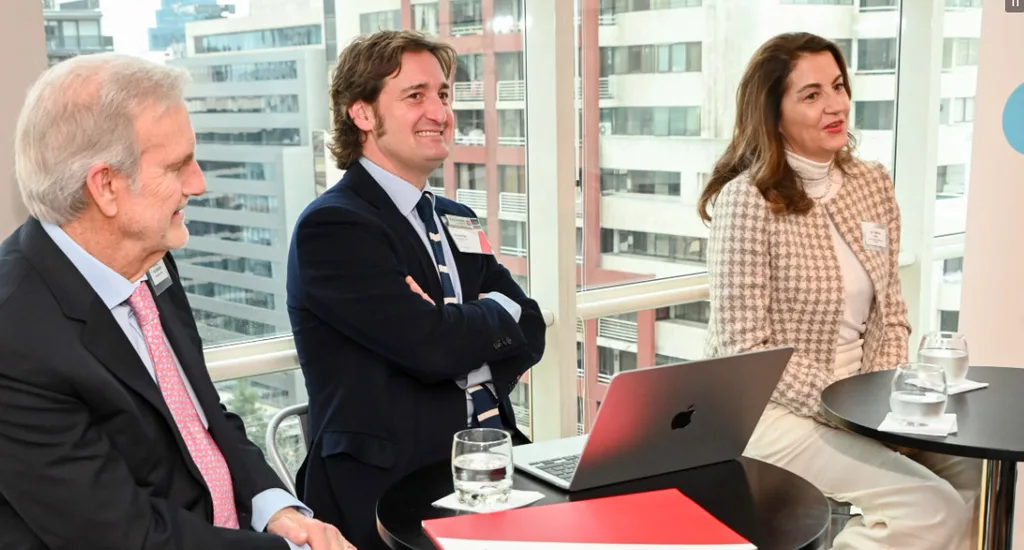
Alessandri | Various private-sector industries have joined forces to establish the first National Association Against Illicit Economies (ANEI), an initiative aimed at coordinating strategic cooperation with authorities to reduce the supply of illegal products and discourage the purchase of goods through informal commerce in Chile.
The creation of the entity responds to a critical assessment of the expansion of criminal activity and the loss of public spaces. According to the recent report Por un Chile sin Economía Ilícita, prepared by the Confederation of Production and Commerce, illicit activities cause an estimated annual loss to the Chilean Treasury of approximately US$1.5 billion, while the private sector spends nearly US$2.7 billion to protect itself against organized crime.
Against this backdrop, leading companies from different industries have adopted an active position of corporate co-responsibility in addressing an issue that, according to the initiative, affects citizens, companies and the government alike. They have warned that smuggling, illicit trade and counterfeiting have become the main financial drivers of other illegal activities.
The coalition comprises BAT Chile, Duracell, Empresas SB, L’Oréal Groupe Chile and Penguin Random House Grupo Editorial. It is chaired by Arturo Alessandri, a lawyer at Alessandri Abogados, and seeks to promote public initiatives based on the premise that the private sector plays a fundamental role in supporting government efforts.
"Today, the economic environment penalizes those who comply with the rules and favors informality, which financially supports criminal groups and facilitates their escalation into other crimes. We have valuable assessments regarding both the decline in tax revenues and the cost of the security burden that the private sector must bear. We seek to be a platform for sharing information and developing activities supported by private initiative, with the aim of finding joint solutions with the State, regulatory authorities and citizens. We believe it is time to take action," said Arturo Alessandri, president of ANEI.
Broad-based support
The launch was attended by representatives of the private sector, civil society and the public sector, including Chile’s Undersecretary of Cultures and the Arts, Carlos Lobos Mosqueira, who called on "actors from all areas to join this cross-sector effort and contribute to a safer nation for all."
María Teresa Vial, president of the Santiago Chamber of Commerce, added: "Companies must step forward by providing concrete data and practical experience. ANEI will make it possible to confront organized crime, which cannot be dismantled using the same tools as before."
More from Alessandri
View profile
Intellectual Property · AI & Intellectual Property
Alessandri trains PDI officers in Chile to detect counterfeit alcoholic beverages
Chile

Intellectual Property

%E2%80%99s%20facilities%20in%20Brazil%2C%20where%20Chalco%20and%20Rio%20Tinto%20agreed%20to%20acquire%20a%2068.6%25%20controlling%20stake-1-1000x500.webp)
